
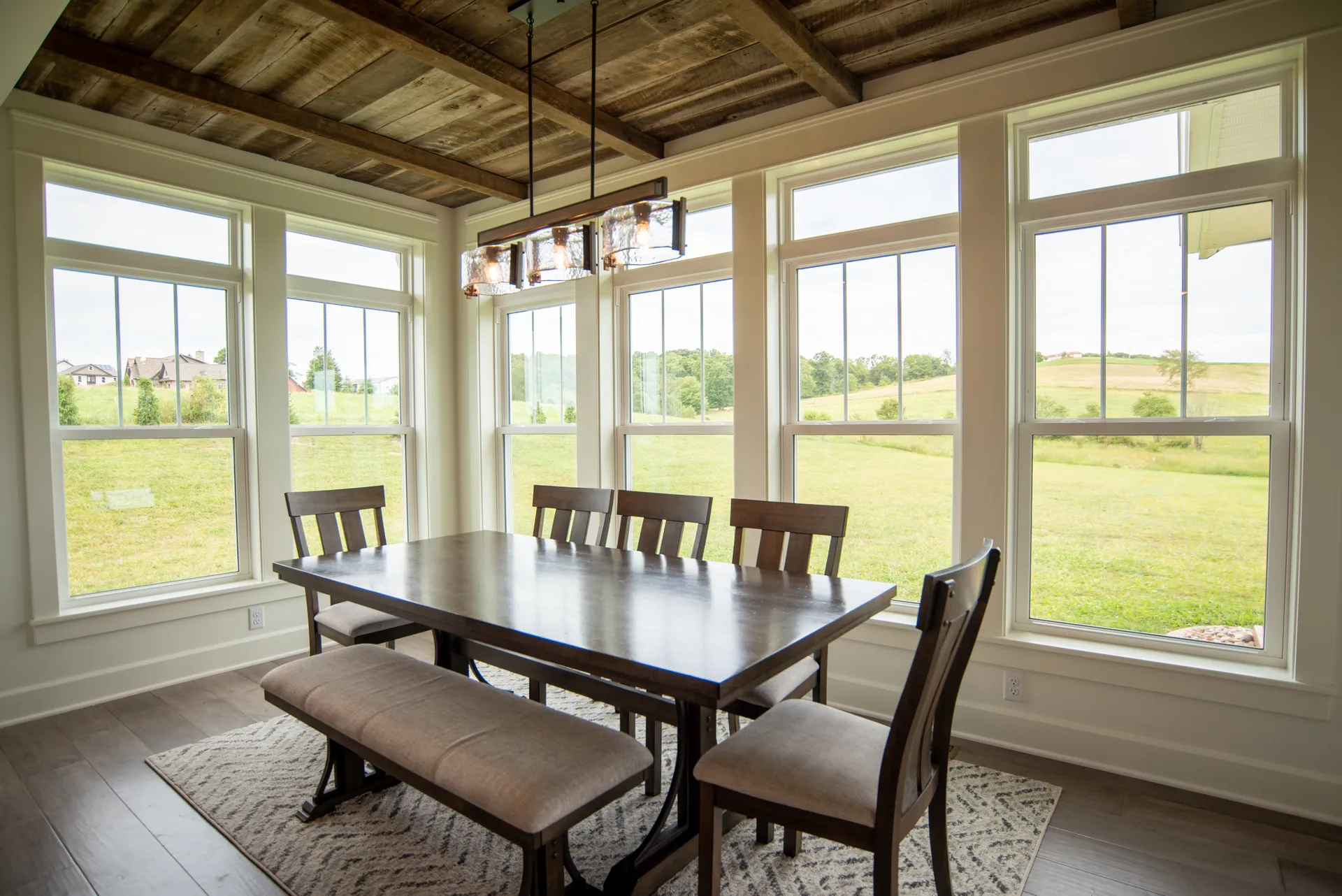
Every “vinyl vs. fiberglass” article you’ll find gives you a generic national answer. The honest answer depends on your climate, and the Southeast has two very different climates inside Aspen Bravo’s own service area.
The Core Comparison
| Vinyl | Fiberglass | |
|---|---|---|
| Upfront cost | Lower | 20–40% higher |
| Thermal expansion | Higher | Lower — holds shape better across temperature swings |
| Lifespan | 20–30 years typical | 30–40+ years typical |
| Best paired with impact glass | Workable | Preferred — stronger frame for storm exposure |
| Maintenance | Very low | Very low |
Our Regional Recommendation
Knoxville and Atlanta: Vinyl is the right default for most homeowners. Humid summers affect seal and glass-package choice more than frame material, and vinyl’s lower cost means that budget can go toward a better glass package (Low-E coating) instead.
Orlando: Fiberglass earns its premium here. Daily heat cycling is more extreme, and if you’re pairing the frame with impact-rated glass (see our impact windows guide), fiberglass’s rigidity is a meaningful advantage over the storm-exposure lifetime of the window.
What This Means for Your Quote
Neither material is a wrong choice — the point of this page is that the “right” answer changes by market, which is also why our quotes default to different starting recommendations in Knoxville/Atlanta versus Orlando instead of a one-size-fits-all pitch.
See how we think about quality tiers in the window installation quality guide, or request a quote for a recommendation specific to your home.
Content status: draft — lifespan/cost ranges above are directionally accurate industry figures; confirm against current product specs before publishing.